Deep Reads
Explore practical explainers on AI, hardware, product building and creative workflows.
All articles41
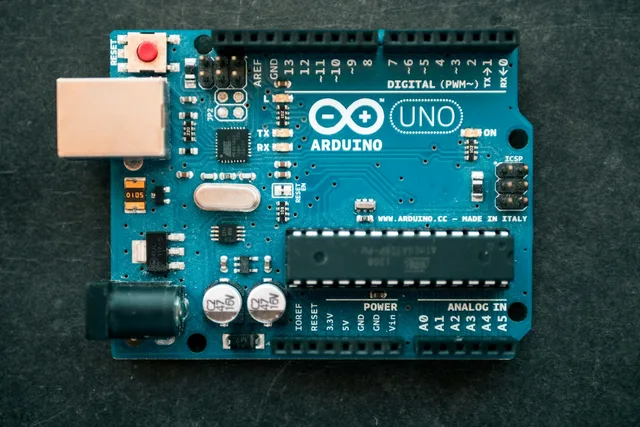
Price the Production Workload Before the Pilot Scales
A pilot’s small inference bill can hide a much larger production run. Rework an explicitly assumed cost scenario, see what model routing changes, and learn why projected savings still need to pass a quality gate.

When a Robot Should Doubt Its Own Memory
A robot can carry a mistaken object label forward in its map. Explore how MIT’s UQ-DAAAM uses uncertainty and new viewpoints to revise descriptions, what its reported results establish, and why separate controlled benchmarks help clarify what remains untested.

What a Shared MCP Gateway Solves—and What It Doesn’t
A metadata-driven MCP gateway can reduce repeated agent-to-dataset integrations, but discoverability is not authorization and a shared endpoint does not prove answer quality. Examine AWS’s architecture, the controls it reports, the limits of its latency evidence, and why realistic evaluation remains a separate job.

Claimable or Warm? Two Different Sandbox Lifecycles
Stripe draws from hot-and-ready sandboxes partitioned by country, use case and platform so agents can test before signup. Figma’s Nimbus keeps capacity warm for rapid allocation. Compare their lifecycles, controls and reported outcomes—and the limits of those results.

Inside Kitta’s Five-Stage, Domain-Specific Code Review
Kitta turns project review history into domain-specific checks and uses patch classification to select a five-stage review workflow. Examine the reported OpenAnolis results, their limits, and how Kitta’s human merge boundary differs from Qwen Code’s approval-dependent PR watch, which can verify and push changes.
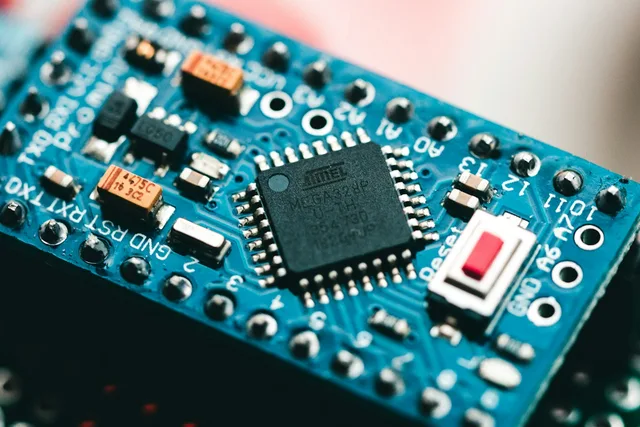
Validate Agent Evaluators Before They Become Gates
Decision models can turn narrow agent-evaluation questions into probability-bearing checks, but those scores need validation before they guide escalation or release gates. Learn how to compare them with human labels, interpret disagreement, and keep synthetic test data in perspective.
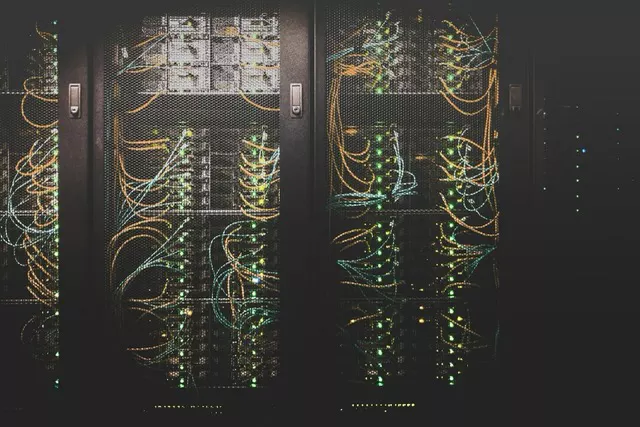
Design Agent Workflows Around Triggers, Handoffs, and Checks
A recurring agent task should not need a model call just to discover there is nothing to do. Learn to define a pre-run trigger, pass a compact handoff, keep detailed evidence accessible, and check results without mistaking safeguards for guarantees.

The Test World Changes What an AI Score Means
Synthetic enterprise workspaces and a fixed bilingual search corpus make different AI evaluations more repeatable. See what Microsoft and Preferred Networks report, how the benchmark’s lite and hard scores differ, and what neither design proves.

Replay, Sound, and Servers: Engineering Battle Drones’ Multiplayer
Battle Drones’ replay and multiplayer features exposed different kinds of engineering constraints: cross-browser numerical differences, uncomfortable audio, and the operational cost of adding a relay server. Follow the reported design changes and what the evidence does—and does not—establish.

AIDD in Practice: Context, Approval Gates, and the Work That Remains
Two LINE Yahoo engineering accounts show that AIDD depends on more than code generation: one team structured legacy-system knowledge and retained approval gates, while another built a narrowly scoped MVP in a cross-functional workshop. Examine the reported outcomes, the QA still to come, and the decision-making burden that may follow faster implementation.
Two Hard-to-Navigate Spaces, Two Different Robotics Safety Claims
A soft robot for the small intestine and an aerial planner for moving obstacles solve different mobility problems. Compare their designs and evidence—from animal studies to a mathematical guarantee and 12 UAV flights—and see what those results do not establish.
From “Make It More Fun” to Evidence You Can Use
Battle Drones shows how a broad creative prompt can become a useful design loop: pair simulation metrics with human play, and treat each as evidence for different questions. Learn what the reported match results establish—and what they cannot prove about fun.
Laplace 3B’s Fixed-State Bet: What the Trainium2 Results Show
Laplace 3B replaces growing KV caches with fixed recurrent state, but that memory advantage comes with retrieval and implementation trade-offs. Examine the Trainium2 engineering decisions, reported results, and what they do—and do not—show for agent systems.
Web Discovery Is Not the Same as Answer Quality
A Cloudflare–OpenAI pilot uses network signals to help discover web pages. Learn why discovery volume is an intermediate metric, what the pilot reports, and which downstream benefits remain unproven.
Make Open-Model Deployments Easier to Reproduce
Open weights do not make a deployment self-describing. Learn to record model revisions, runtime images, infrastructure, and workload conditions so you can investigate what changed—without confusing a configuration record with a performance result.
Review Coding-Agent Tasks Through Evidence
A repository full of tests and agent rules does not prove they helped with a specific coding task. Learn to trace a goal through changes, checks, results, and acceptance—and turn evidence gaps into small improvements you can verify.
Design Geospatial Agents Around Plans You Can Inspect
Geospatial agents must do more than produce a convincing map. Learn how to make their plans, data choices, and spatial calculations inspectable—and how to test a workflow before relying on its result.
When a Better Prompt Is Not Enough: Control the Image-Making Process
Google Research’s Diffusion Controller frames image generation as a control problem. Learn how to separate prompt compliance from image quality, and when feedback is—and is not—the right intervention.

Design Video Pipelines That Survive a Disconnected Browser
Design long-running video work as an authorized session with reconnect, preview, and expiry rules—not as a request that must stay open until processing ends.
Browser AI or server inference? Design the fallback before choosing
Compare browser-built and server-side AI as product contracts, then route by capability, privacy, coverage, and failure behavior.

Audio beat sheets for short AI video
Plan picture, dialogue, effects, ambience, and silence on one timeline, then review native-audio video with four checkable criteria.
Agent workflows need three budgets, not one
A token cap alone cannot bound an autonomous coding task. Combine token, turn, and time budgets with explicit evidence and action limits.

AI video budgeting: measure cost per approved second
API price per generated second hides retries and review. Use separate generation and approval ledgers to learn what each delivered second really costs.
AI code review: measure useful findings, not the number of comments
GitHub’s October ReviewBench article provides a useful starting point for choosing a reviewer. Build a small, independent review exercise that separates reproducible defects, missed problems and comment noise.
GGUF in Transformers: check the runtime path before comparing local models
Hugging Face’s September integration makes a useful local-model learning exercise. Separate checkpoint format, device support and runtime behavior, then compare a small set of tasks under recorded conditions.
AI model routing: compare cost per successful task before chasing cheap tokens
Cloudflare’s recent Auto Router announcement raises a practical engineering question: does a cheaper request produce a cheaper completed task? Design a small routing experiment that accounts for failures, retries and review time.
Choosing an MoE model: active parameters are not a memory budget
A recent NVIDIA engineering article explains a common model-selection trap. Build a memory worksheet from total weights, runtime overhead and your actual workload instead of assuming the active-parameter count tells you what will fit.
AI short dramas: budget for usable shots, then test the story
A recent Pika studio profile is a starting point for learning how to track retries, inspect continuity and keep a small drama within a real production budget.

Generative photo editing: distinguish a better composition from new evidence
Adobe’s Elements 2027 announcement offers a useful way to learn image expansion and upscaling. Keep the original, review invented detail and label the purpose of an edit.
Neural rendering: write an art-direction checklist before comparing beauty shots
NVIDIA’s recent DLSS 5 developer article shows why rendering comparisons need a fixed scene, a clear visual goal and a review of motion as well as still frames.
From video models to robot control: read a research demo without overstating it
Runway’s September Praxis-1 announcement raises useful questions about video learning, model availability and the difference between ranking policies and proving safe task completion.
Qwen Code Workflows: Choosing Interactive or Batch AI Tasks
AI-assisted original analysis: use four questions and a small paper exercise to choose a work mode, define useful outputs and catch errors before scaling up.
A continuity ledger for AI short dramas: one character, three shots
Design a three-shot tea scene with explicit character, prop and location states, then review intentional changes separately from unexplained drift.
AI video: build a short sequence from three clear shots
Plan a small storyboard, separate motion from visual design, compare a few takes and edit for continuity. An original three-shot exercise for learning AI video and animation workflows.
AI coding: turn a generated change into a release you can check
Use a tiny search feature to practice acceptance examples, behavior checks, file review and a reversible release. A practical workflow for checking AI-generated changes before shipping.

AI images: design a coherent series instead of collecting lucky outputs
Build three related visuals around a shared design brief. Separate what stays fixed from what changes, give reference images clear roles, and keep a record you can inspect.
AI short dramas: keep the character and story consistent across shots
Plan a tiny drama before generating clips. Use a character sheet, a continuity checklist and a shot-by-shot review to make a short sequence easier to follow.
Is a 40-TOPS Accelerator Worth It? Price the Whole Edge-AI System First
The Raspberry Pi AI HAT+ 2 moved from a $130 launch price to $200 on the current product page. Evaluate total system cost, model limits, and genuinely replaceable work—not TOPS alone.
Inaccurate RAG Answers? Check How Your Articles Are Chunked
AI can still give incorrect answers after you add articles to a knowledge base. Sometimes the problem starts during retrieval: it finds a passage that looks relevant but loses track of the model, experiment, or article it belongs to. Preserving context when splitting content is a useful place to start checking.
How Much Memory Does a 7B Model Need? Start with the Weights
Deciding that a GPU can run a model just because its description says “7B, 4-bit” can overlook other memory needs. You can estimate weight size by hand, but weights are only part of the inference system. Keeping theoretical size separate from peak runtime usage makes hardware decisions clearer.
Why Longer AI Conversations Use More VRAM: Understanding the KV Cache
Model weights stay the same, yet longer conversations are more likely to run out of memory. One reason is the KV cache saved during generation. Its size depends on context length, model architecture, and concurrency, so your hardware budget needs to account for both model size and usage.